
Walking into a casino for the first time can feel exciting, but also slightly overwhelming. There are flashing lights, constant sounds, and games happening in every direction. Dealers are speaking quickly, screens are updating numbers, and players are using words that may not immediately make sense.
In the middle of all this, certain terms come up again and again.
You hear phrases like house edge, RTP, odds, variance, and bankroll. At first, these words can sound technical, almost like they belong to a different world. It may even feel like you need special knowledge just to follow what is happening.
But the truth is much simpler.
These terms are just ways to explain how casino games work. Once you understand them in plain language, the entire experience becomes clearer and more comfortable.
Simple Terms That Explain How Casino Games Work
Some casino terms describe the basic structure of games. These are the most important ones to understand first.
House Edge
The house edge is the built-in advantage that the casino has in every game.
It does not mean you cannot win. It simply means that over time, across many players and many rounds, the casino keeps a small percentage of the total money played.
For example:
- Roulette (European): ~2.7% house edge
- Blackjack (with optimal play): ~0.5%–1%
- Slot machines: ~4%–8%
This percentage may seem small, but it adds up over time.
RTP (Return to Player)
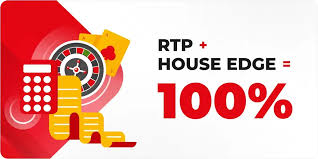
RTP is closely related to the house edge. It shows how much money is returned to players over the long run.
For example:
- RTP of 96% means players receive ₹96 back for every ₹100 wagered (over time)
- The remaining ₹4 represents the house edge
The Relationship Between RTP and House Edge
A simple relationship: as RTP increases, the house edge decreases.
Variance
Variance explains how results are distributed over time.
- Low variance: small, frequent wins
- High variance: rare but larger wins
For example:
- A low variance slot may give small payouts every few spins
- A high variance slot may go 30–50 spins without a win, then pay big
Variance does not change the RTP. It only changes how the experience feels.
Odds
Odds describe the likelihood of an outcome happening.
For example:
- A coin flip has 50/50 odds
- In roulette, landing on a single number has odds of 1 in 37 (European wheel)
Odds determine how payouts are structured, but they do not always match the true probability exactly. That difference is where the house edge exists.
Bankroll
Your bankroll is simply the money you set aside for playing.
It is your personal limit.
For example:
- If you bring ₹5,000 to play, that is your bankroll
- Once it is gone, the session ends
Managing your bankroll is one of the most important aspects of staying in control.
Terms That Describe Your Playing Experience
Not all casino terms are mathematical. Some describe what players feel while playing.
Hot Streak
A hot streak is when a player wins several times in a row.
It creates a feeling of momentum and confidence.
However, statistically, it is just a short-term pattern within random results.
Cold Streak
A cold streak is the opposite.
It happens when losses occur repeatedly over a short period.
Even though it feels frustrating, it is a normal part of variance.

Chasing Losses
This is an important behavioral term.
Chasing losses means continuing to play in an attempt to recover money that has already been lost.
For example:
- A player loses ₹2,000
- They increase bets to try to win it back quickly
This often leads to larger losses because decisions become emotional instead of controlled.
Comps
Comps are complimentary rewards given by casinos.
These can include:
- Free meals
- Hotel stays
- Cashback or free play
They are based on your level of play, not your winnings.
Typical comp return:
- Around 5%–20% of expected losses
This means comps are a small return, not a profit source.
High Roller
A high roller is a player who bets large amounts consistently.
For example:
- Regular player: ₹500–₹5,000 bets
- High roller: ₹50,000+ bets
These players often receive:
- VIP treatment
- Higher comps
- Private gaming areas
However, the game rules and house edge remain exactly the same.
How All These Terms Connect
Once you understand these terms, the casino environment becomes much easier to follow.
Everything connects in a simple way:
- House edge explains why the casino profits over time
- RTP shows how much is returned to players
- Variance explains why results feel different in the short term
- Odds define the likelihood of outcomes
- Bankroll keeps your spending controlled
- Streaks describe natural ups and downs
- Comps add small rewards based on play
- High rollers show how scale changes the experience
What once felt like complex language becomes a set of simple ideas.
A Practical Perspective
Understanding these terms does not change the outcome of the games, but it changes how you experience them.
For example:
- You no longer see a cold streak as “bad luck” alone
- You understand that comps are not free money
- You recognize that higher bets do not improve odds
This awareness creates a more balanced approach.
Final Thoughts
Casino terminology can seem confusing at first, but it is simply a way of describing how games work and how players interact with them.
Once these terms are broken down into everyday language, they become easy to understand.
The house edge, RTP, variance, odds, and bankroll are not complicated ideas. They are just tools that explain the system behind the games.
At the same time, terms like hot streaks, cold streaks, and chasing losses reflect the human side of the experience.
When you understand both sides—the mathematical and the emotional—the casino no longer feels unpredictable or overwhelming.
Instead, it becomes something much clearer.
A system with simple rules, natural ups and downs, and a structure that stays consistent over time.
And with that understanding, you can move through the experience more calmly, without feeling lost in the words around you.