
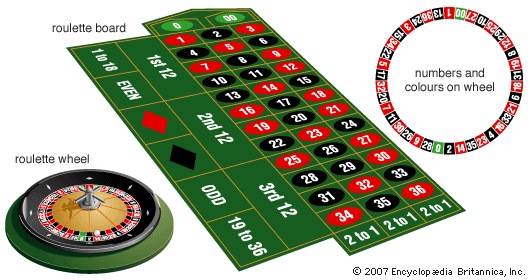
Casino probabilities describe the likelihood of different outcomes, but the rules of a game help determine how those probabilities apply in practice. Two casino games may look similar while using different rules that affect the player’s available decisions and the mathematical chances of particular results. Understanding this relationship makes casino terminology easier to interpret.
What Casino Probabilities Mean
Probability measures how likely an event is to occur. It can be expressed as a fraction, a decimal, or a percentage. In casino games, probability may describe the chance of drawing a particular card, rolling a specific number, or receiving a certain combination of symbols.
However, probability does not operate separately from the game’s rules. The available outcomes, the actions permitted to players, and the conditions for winning all influence how a particular situation should be evaluated.
How Table Rules Affect Outcomes
Different table games use specific procedures that determine how each round develops. In blackjack, for example, rules concerning dealer behavior, doubling down, splitting pairs, and the treatment of certain hands can influence the mathematical value of available decisions.
Roulette provides another example. European roulette generally has a single zero pocket, while American roulette includes both a zero and a double-zero pocket. This difference changes the number of possible pockets and affects the probability of a straight-up winning number.
These examples show why knowing a game’s name is not enough to understand its mathematical structure. The exact version and its rules also matter.
Understanding the House Edge
The house edge represents the casino’s theoretical mathematical advantage under specified game conditions. It is generally expressed as a percentage of the amount wagered, although the calculation depends on the game and its rules.
A change in table rules can alter this advantage. For example, a rule that changes how a dealer plays a particular hand may affect the expected results over many rounds. The effect should be evaluated using the complete rule set rather than an isolated feature.
Why Reading the Rules Matters
Players who compare games should check the rules that apply to the specific table or version. Small differences can have mathematical consequences even when the games appear nearly identical.
Probabilities describe likelihoods, not promises about individual outcomes. A favorable mathematical condition does not guarantee a win in a particular round.
Understanding how table rules interact with probability helps readers interpret casino terminology accurately and distinguish the mathematical structure of a game from the uncertainty of actual results.
1 Comment
[…] Payout amounts are related to, but different from, the return to player percentage, commonly called …. RTP is a theoretical measure of the proportion of total wagers a game is designed to return to players over a very large number of plays. […]