
The Hidden Number Behind Every Casino Game
Walk into any casino and you are immediately surrounded by light, sound, and excitement. Slot machines glow, cards shuffle, and every table feels full of possibility. Most players focus on one simple idea: winning.
But beneath all that excitement, there’s a quiet number shaping everything.
That number is RTP — Return to Player.
It doesn’t flash on the screen. It doesn’t tell you when you’ll win. Yet it quietly controls how every game behaves over time. Understanding RTP won’t guarantee wins—but it will change how you see the game entirely.
What RTP Really Means (In Simple Terms)
RTP stands for Return to Player, and it represents the percentage of total money a game gives back to players over time.
If a slot has an RTP of 96%, it means:
- For every ₹100 wagered across many players
- About ₹96 is returned as winnings
- ₹4 stays with the casino (this is called the house edge)
Think of it like this:
Imagine 1,000 players each betting ₹100 on the same game:
- Total money played: ₹1,00,000
- Expected return to players: ₹96,000
- Casino keeps: ₹4,000
But here’s the key:
👉 This happens over thousands or millions of spins, not in one session.
Visualizing RTP Over Time
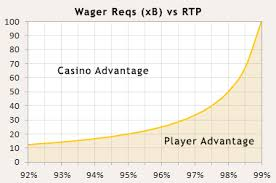
RTP is a long-term statistical curve—not a short-term guarantee.
Over a short session, anything can happen:
- You could double your money quickly
- Or lose it just as fast
But over time, the math always leans toward the RTP percentage.
Why RTP Matters More Than Most Players Realize
Many beginners ignore RTP completely. Experienced players don’t.
Real-world comparison:
| Game | RTP | Expected Loss Over Time |
|---|---|---|
| Game A | 98% | ₹2 per ₹100 |
| Game B | 92% | ₹8 per ₹100 |
That difference may seem small—but over hundreds of bets, it adds up quickly.
Example:
If you play ₹10,000 worth of spins:
- 98% RTP game → Expected loss: ₹200
- 92% RTP game → Expected loss: ₹800
That’s 4x more loss, just from choosing a lower RTP game.
What Players on Forums Often Say
Across gaming communities, RTP is one of the most discussed topics.
“I didn’t even check RTP when I started. Once I switched to higher RTP slots, my sessions lasted way longer.”
“RTP doesn’t make you win—but low RTP definitely makes you lose faster.”
“It’s not about winning big, it’s about surviving longer in the game.”
These insights reflect a common pattern:
👉 RTP doesn’t control luck, but it controls how fast your money drains.
RTP vs Reality: What Actually Happens When You Play
Here’s where many players misunderstand RTP.
RTP DOES:
✔ Show long-term expected returns
✔ Help compare games
✔ Influence how long your bankroll lasts
RTP DOES NOT:
❌ Guarantee your result
❌ Predict your next spin
❌ Prevent losses
The Missing Piece: Volatility (Very Important)
Two games can have the same RTP but feel completely different.
Example:
| Game Type | RTP | Experience |
|---|---|---|
| Low Volatility Slot | 96% | Frequent small wins |
| High Volatility Slot | 96% | Rare but big wins |
Player experience:
- Low volatility → steady, longer gameplay
- High volatility → bigger risk, bigger excitement
“I played a 96% slot and lost quickly. Later I learned it was high volatility—it barely pays unless you hit big.”
So RTP tells you how much, but volatility tells you how it feels.
Industry Stats You Should Know
- Most online slots have RTP between 94% and 97%
- Classic table games:
- Blackjack (optimal strategy): ~99% RTP
- Roulette (European): ~97.3% RTP
- Roulette (American): ~94.7% RTP
- Some high-end slots advertise RTP up to 98–99%, but are often high volatility
👉 This is why experienced players often prefer:
- Blackjack (skill-based advantage)
- High RTP slots (for longer sessions)
A Simple Way to Understand RTP
Think of RTP like a slow leak.
- A high RTP game → tiny leak (money lasts longer)
- A low RTP game → bigger leak (money drains faster)
No matter what, the leak is always there.
Common Mistakes Players Make
1. Thinking RTP Guarantees a Return
“I played ₹100, so I should get ₹96 back.”
→ Not how it works.
2. Ignoring RTP Completely
Choosing games based only on visuals or bonuses.
3. Chasing Losses Based on “Due Wins”
Games don’t “owe” you anything.
Expert Perspective
A common principle in probability:
“Short-term results are random. Long-term results are predictable.”
RTP lives in the long term.
Your session lives in the short term.
That gap is where most confusion happens.
So, How Should You Actually Use RTP?
Instead of seeing RTP as a strategy, treat it as a filter:
Before playing:
- Prefer games with RTP 96% or higher
- Check volatility if available
- Avoid very low RTP games unless for entertainment
While playing:
- Focus on session limits, not RTP expectations
- Accept randomness in the short term
Final Thoughts: RTP as a Quiet Advantage
RTP doesn’t change your luck.
It doesn’t predict your wins.
And it doesn’t guarantee anything.
But it does give you awareness.
Think of it like sitting next to someone experienced who quietly says:
“This game will treat your money better over time.”
That small piece of knowledge won’t remove the excitement—but it will make you a smarter player.
One Last Visual Reminder
Higher RTP doesn’t mean more wins.
It means more time, more balance, and better long-term value.